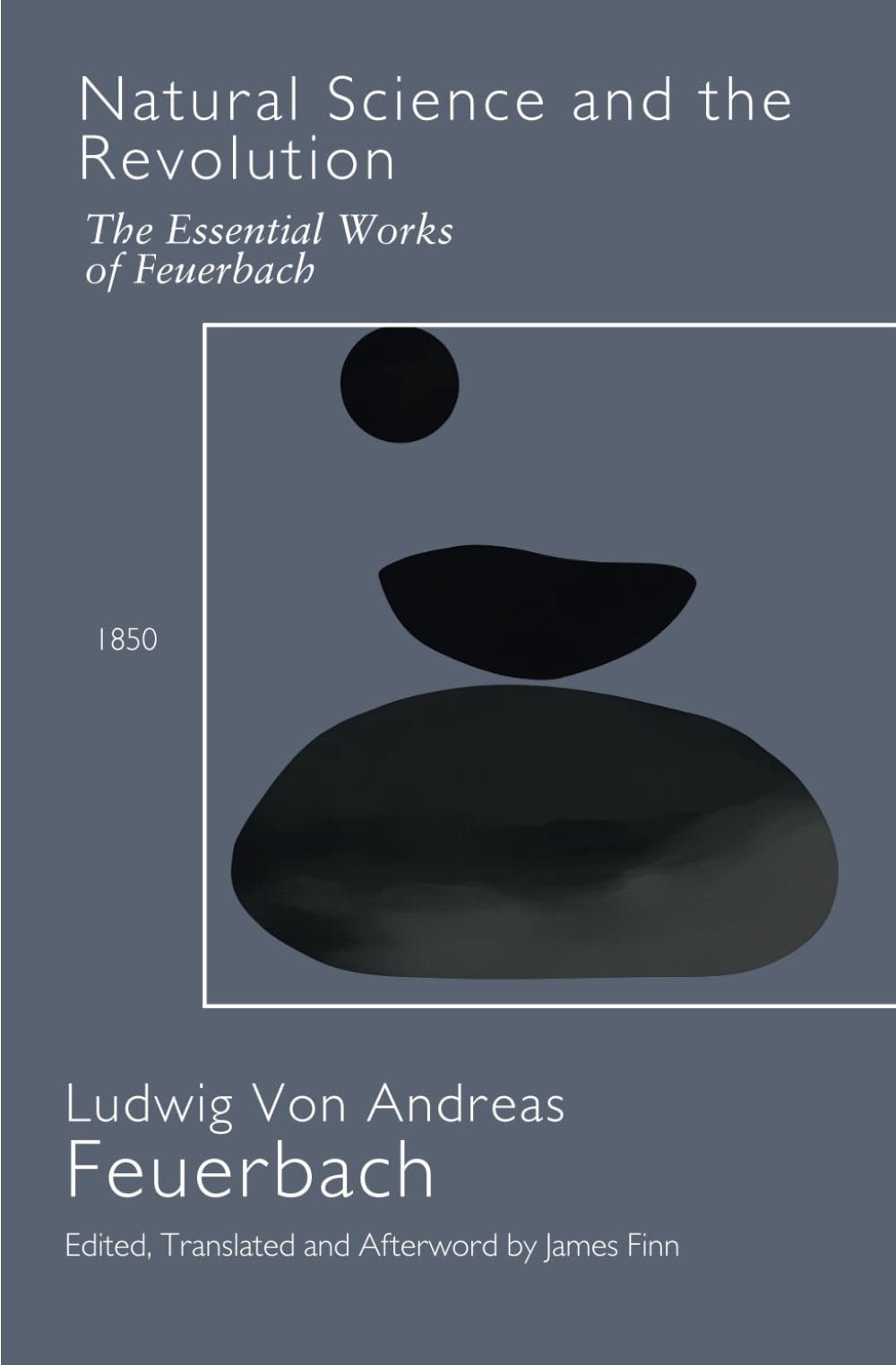
Die Naturwissenschaft und die Revolution (Natural Science and the Revolution) is a political work published in 1850 that reflects Feuerbach’s views on the relationship between science and politics. In this work, Feuerbach argues that the natural sciences have the potential to bring about a revolution in society and politics, but that this revolution can only be achieved through a fundamental change in the way society is organized. Here, he heavily emphasizes education. Stalin, in his 1906 book Anarchism or Socialism , discusses Feuerbach: “If the dialectical method originates from Hegel, then the materialist theory is a development of the materialism of Feuerbach. This is well known to anarchists, and they try to use the shortcomings of Hegel and Feuerbach in order to denigrate the dialectical materialism of Marx and Engels. With regard to Hegel and the dialectical method, we have already pointed out that such tricks of the anarchists cannot prove anything other than their own ignorance. The same must be said regarding their attacks on Feuerbach and materialist theory.” Feuerbach was heavily influential on Marx, who modeled his entire religion on Feuerbach’s de-mythologization of the Hegelian dialectic. Schopenhauer and Nietzsche both took their satirical criticism about religion from Feuerbach, and every aspect of Marxism can be found here in Marx’s favorite Philosopher. Feuerbach is a critical figure in the development of not merely Marxism, but Materialistic Humanism in general. Feuerbach is critical to understanding Marx. Feuerbach’s scientism reflects Saint-Simonian positivism but redirects it toward proletarian emancipation. His faith in pedagogy as revolutionary praxis anticipates Gramsci’s “organic intellectuals” and Freire’s Pedagogy of the Oppressed . The text’s critique of scientific elitism—knowledge hoarded by bourgeois institutions—prefigures Bernal’s Social Function of Science and feminist critiques of androcentric epistemologies. Critics note Feuerbach’s naiveté regarding science’s ideological complicity, a blind spot later addressed by Horkheimer’s Eclipse of Reason , which warns of instrumental rationality’s authoritarian tendencies. This modern, accessible translation of Ludwig Feuerbach's seminal work brings new clarity to his dense and incredibly specific philosophical prose, offering contemporary readers a fresh lens on one of the key thinkers of 19th-century philosophy. More than just a translation, this edition includes carefully curated extra materials designed to clarify Feuerbach’s unique place in the genealogy of ideology and relevance today. A fresh Afterword focuses on Karl Marx’s critical engagement with Feuerbach’s ideas, revealing the pivotal role Feuerbach played in shaping Marxist thought. Also included is a detailed timeline of Feuerbach’s life and works, as well as a helpful glossary of philosophical terms, making this volume an essential resource for students, scholars, and curious readers alike.
| Gtin | 09798315219736 |
| Age_group | ADULT |
| Condition | NEW |
| Gender | UNISEX |
| Product_category | Gl_book |
| Google_product_category | Media > Books |
| Product_type | Books > Subjects > Politics & Social Sciences > Philosophy > Consciousness & Thought |