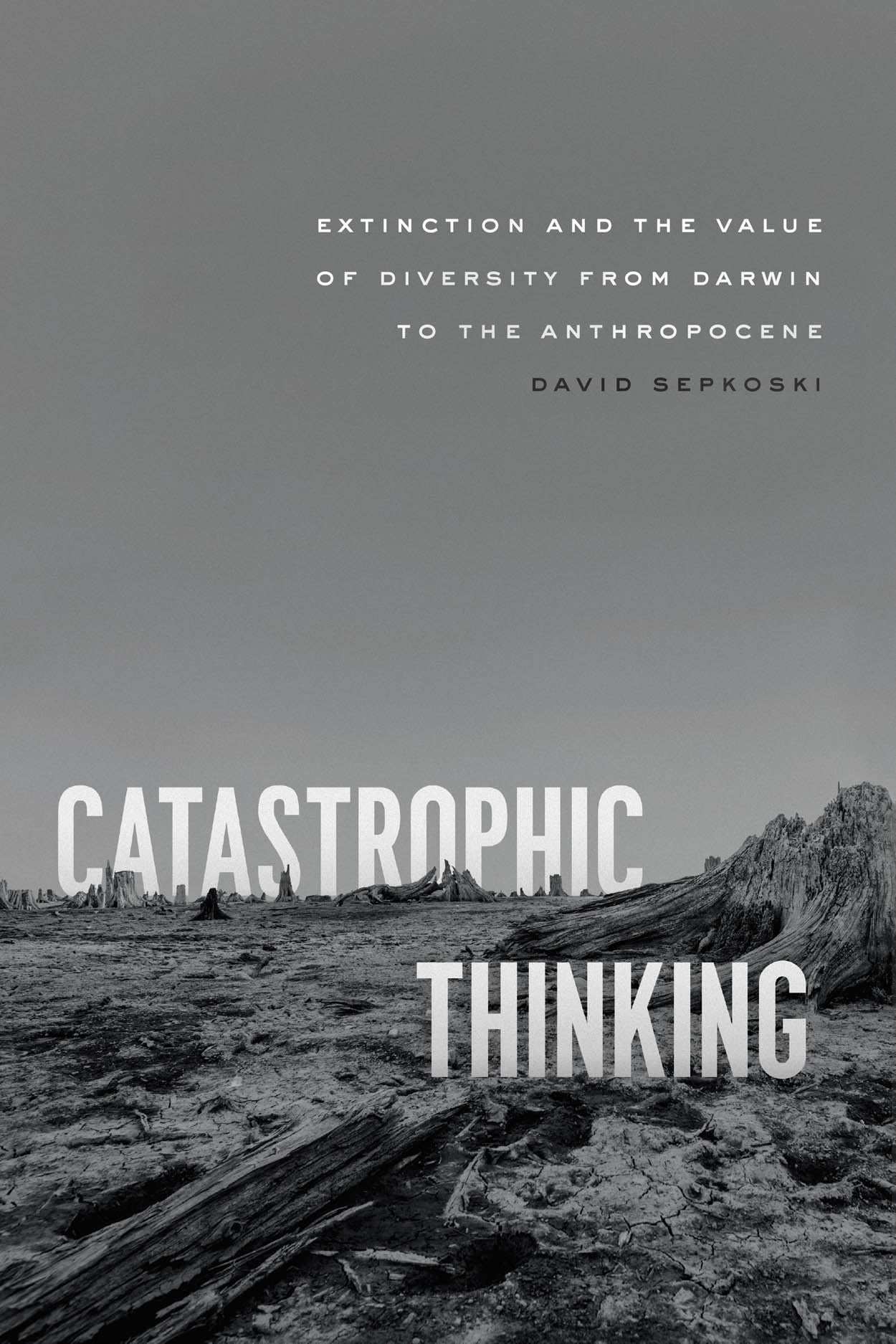
A history of scientific ideas about extinction that explains why we learned to value diversity as a precious resource at the same time as we learned to “think catastrophically” about extinction. We live in an age in which we are repeatedly reminded—by scientists, by the media, by popular culture—of the looming threat of mass extinction. We’re told that human activity is currently producing a sixth mass extinction, perhaps of even greater magnitude than the five previous geological catastrophes that drastically altered life on Earth. Indeed, there is a very real concern that the human species may itself be poised to go the way of the dinosaurs, victims of the most recent mass extinction some 65 million years ago. How we interpret the causes and consequences of extinction and their ensuing moral imperatives is deeply embedded in the cultural values of any given historical moment. And, as David Sepkoski reveals, the history of scientific ideas about extinction over the past two hundred years—as both a past and a current process—is implicated in major changes in the way Western society has approached biological and cultural diversity. It seems self-evident to most of us that diverse ecosystems and societies are intrinsically valuable, but the current fascination with diversity is a relatively recent phenomenon. In fact, the way we value diversity depends crucially on our sense that it is precarious—that it is something actively threatened, and that its loss could have profound consequences. In Catastrophic Thinking , Sepkoski uncovers how and why we learned to value diversity as a precious resource at the same time as we learned to think catastrophically about extinction. " Catastrophic Thinking presents the best introductory account of how the idea of species-wide loss was conceived and established in scientific circles. . . . [Sepkoski] convincingly suggests that ideas about extinction in each historical period reflect broader social and cultural concerns in the modern world, from the intimate connections between extinction and imperialism to current concerns about the global biodiversity crisis. . . . Extinction is no longer a specialized concern. In this climate, David Sepkoski’s accessible guide is most welcome." ― Times Literary Supplement "Convincingly demonstrates that an ecological perspective has profoundly shaped our views of biological and social communities. . . . Sepkoski's magisterial work will hopefully serve as an inspiration for more comprehensive histories of the concept of diversity. . . . Catastrophic Thinking is essential reading for those seeking to understand the origin of one of the most powerful concepts under consideration today." ― Science "A brilliant examination of an urgent subject, with lessons not just for addressing mass extinction but also for reckoning with the intellectual background against which we have failed to do so. Sepkoski is a scientific Maurice Sendak, conjuring a strange world in which the wild things are not the lost animals and plants of the earth’s past so much as the scientists clamouring to study—if not save—them. . . . This book uncovers a pattern of stasis and rupture; ideas, like species, thrive for a time, only to see the context in which they thrived wiped out. Arriving at this particular moment, in a world stalked by extremists and stoked by a profit-driven public square, Sepkoski’s account of where the wild things went makes perfect sense. In an age of rupture, what other way could it have been written? To paraphrase one of Sepkoski’s own sources: Catastrophic Thinking is the extinction story our era deserves." ― Social History of Medicine "Excellent. . . . Catastrophic Thinking is a closely argued, gracefully written book. In fact, it might even be regarded as several books in one: as a history of extinction science, an essay on the origin of a social value, and more subtlety, a piece of cultural criticism. These elements blend together almost seamlessly. Sepkoski achieves just the right mix of historical detachment, scientific sophistication and cultural perceptiveness to carry off his ambitious project. There are plenty of surprises for the reader along the way, and not a little wisdom. In our present age of catastrophes and catastrophizing, it deserves a wide and enthusiastic readership." ― Metascience "Far from a dry recitation of the scientific literature, Sepkoski's meta-analysis of extinction and biological diversity foregrounds ideas and rhetorical choices. . . . Lucidly written and keenly personal, Catastrophic Thinking is engaging from beginning to end. . . . Sepkoski delineates new territory in the discourse of extinction by reviewing and revisiting the most important scientific figures and literature (popular and academic) of each era since catastrophic thinking took hold of the Western imaginary. Readers interested in the scientific history of extinction as a modern concept, particularly as it was formed by hu
| Gtin | 09780226829524 |
| Age_group | ADULT |
| Condition | NEW |
| Gender | UNISEX |
| Product_category | Gl_book |
| Google_product_category | Media > Books |
| Product_type | Books > Subjects > Science & Math > Nature & Ecology > Conservation |